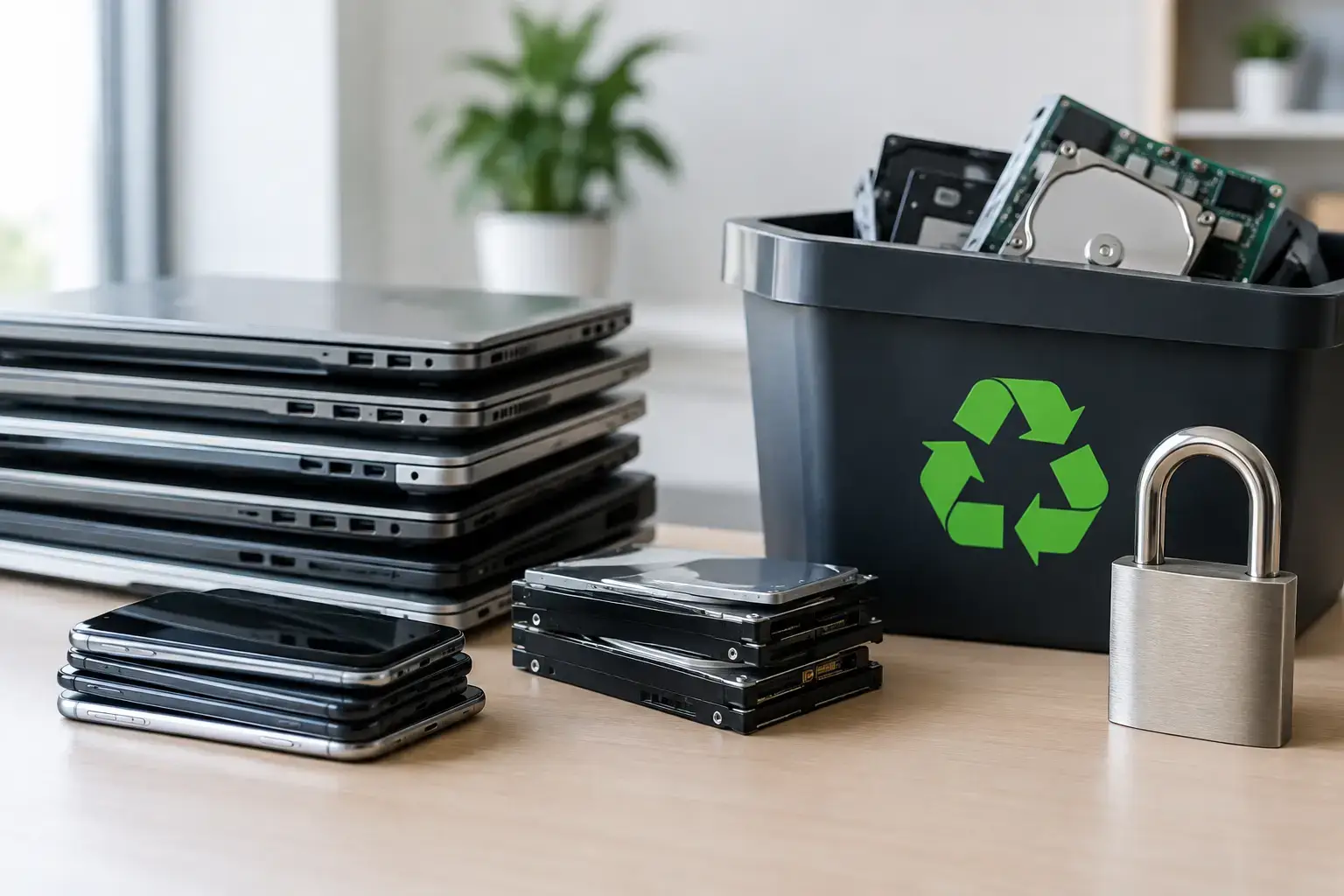
A retired laptop can still hold years of emails, saved passwords, customer records, financial files, and personal photos. The same is true for old office desktops, servers, phones, network equipment, and external drives. Leaving these devices in a storeroom is not a long-term plan, and passing them to an informal collector can create unnecessary risk. ITAD services give households and businesses a safer, documented way to remove unwanted technology while protecting the data it may still contain.
ITAD stands for IT asset disposition. In practical terms, it is the controlled process of collecting, checking, wiping or destroying data-bearing devices, documenting their removal, and sending electronics to appropriate downstream recycling channels. It is not simply about getting rid of old equipment. It is about knowing what happened to it.
What ITAD Services Actually Cover
ITAD services are designed for technology that has reached the end of its useful life for the owner, whether it is broken, outdated, surplus, or being replaced during an office upgrade. The process can apply to a single home computer or a larger batch of business equipment.
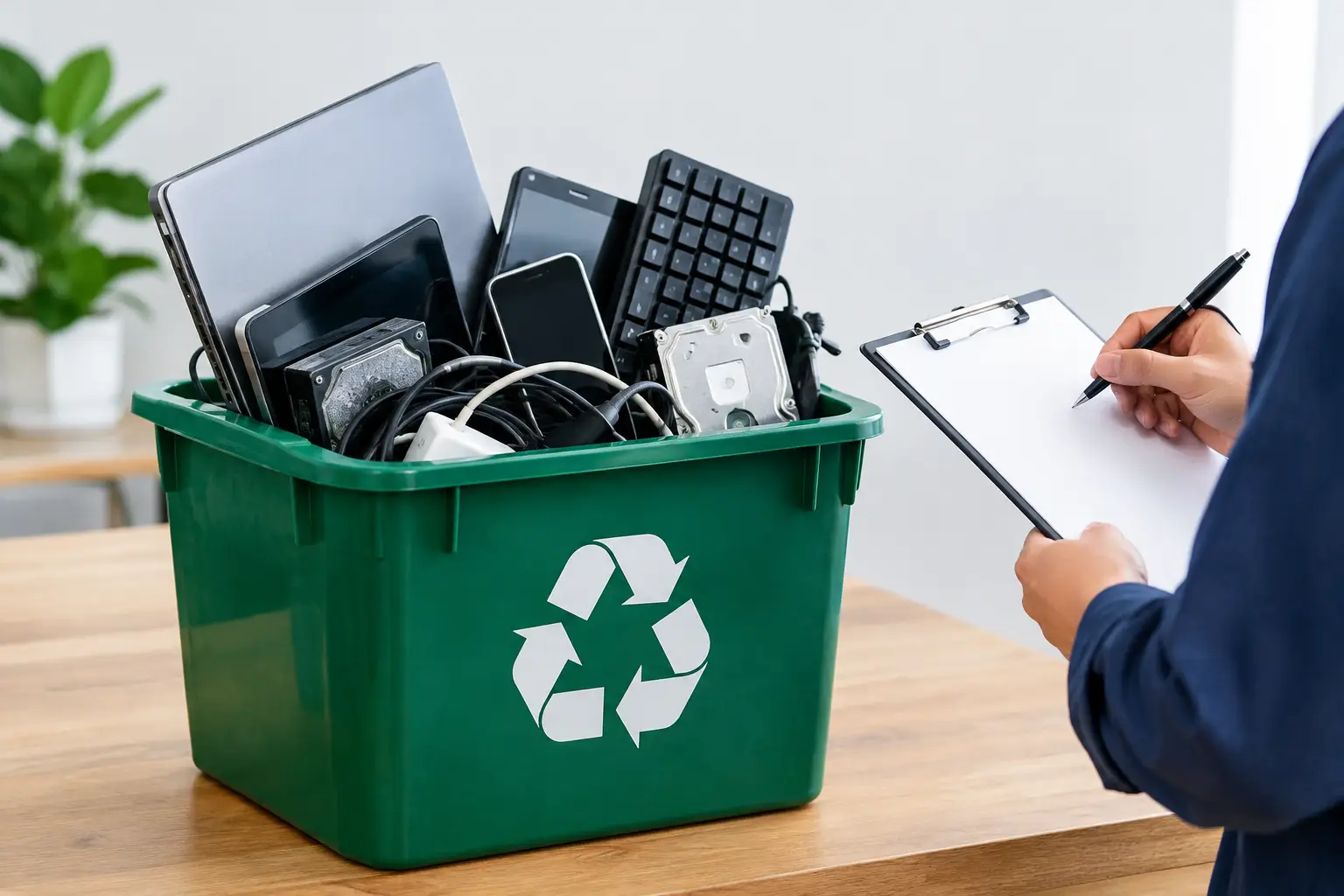
Common items include desktop computers, laptops, monitors, phones, tablets, servers, hard disk drives, SSDs, printers, routers, switches, keyboards, cables, and other small electronic devices. Businesses may also need support with office equipment and network hardware that cannot be placed in ordinary waste collection.
The level of service should match the equipment and the risk involved. A household clearing out a few old devices may primarily need convenient pickup and reassurance that the electronics will be handled responsibly. An office disposing of staff laptops and storage equipment may need asset verification, secure data wiping, and records for internal accountability.
That distinction matters. A device with no storage media does not present the same data risk as a laptop, server, or phone. A professional ITAD provider should recognize the difference rather than treating every item as generic scrap.
Why Data Security Comes Before Recycling
Recycling is an important outcome, but data protection should be the first question when disposing of IT equipment. Deleting files, emptying a recycle bin, or performing a basic reset may not permanently remove recoverable information. Storage devices can retain data in areas that are not visible during normal use.
For this reason, a secure ITAD process identifies devices that may contain data before they are passed into the recycling stream. Depending on the device condition and the agreed requirement, the provider may perform verified data wiping or support physical hard drive destruction. The right approach depends on the type of media, whether the device still functions, and the sensitivity of the information involved.
For working drives that need to remain intact, secure overwriting can be a suitable option. MYPC2U uses DoD 5220.22-M 3-pass data wiping for applicable devices, providing a more deliberate method than a standard deletion. If a drive is damaged or cannot be wiped reliably, physical destruction may be more appropriate.
Businesses should avoid assuming that an old device is harmless because it has not been used recently. A former finance laptop, a retired sales phone, or a failed office server can still contain personal data, customer information, account credentials, or confidential documents. If there is uncertainty, treat the device as data-bearing until it has been checked.
The Value of Documented Pickup
One of the biggest differences between ITAD services and an informal collection arrangement is traceability. When equipment leaves a home or workplace, the owner should have a clear record of what was collected and when.
For businesses, documented pickup helps create an internal trail for IT, administration, management, and compliance purposes. It can support an asset register update, confirm that equipment has been removed from the premises, and reduce confusion about whether a device was disposed of, reassigned, or misplaced.
For households, a pickup record offers simple peace of mind. It confirms that the old computer, phone, or other electronic device has been handed over through a professional process rather than left at an unknown collection point.
Documentation does not have to be complicated to be useful. The key is clarity: the collection date, the pickup location, and a reasonable record of the items handed over. For larger business collections, asset verification may also be needed to identify specific devices by serial number or other asset details.
A Practical ITAD Process for Businesses
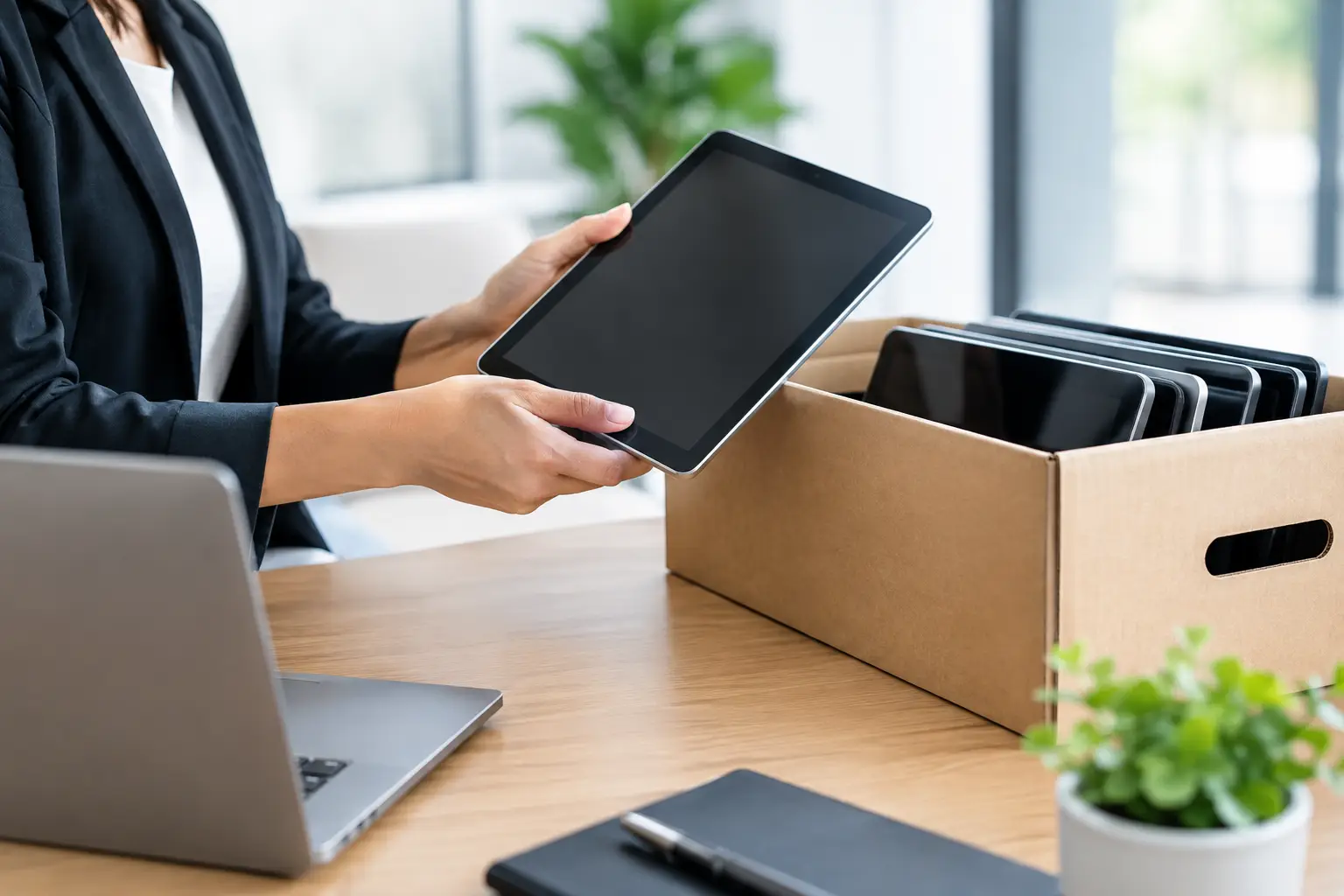
A well-managed ITAD process begins before collection day. First, identify the equipment that is ready to leave. This could be a small batch after a staff refresh or a larger quantity following an office move. Separate items that contain storage media from accessories and non-data-bearing devices where possible.
Next, decide what level of data handling is required. Sensitive business devices should not be mixed into a general disposal pile without a plan. Your IT team or office manager may need to identify laptops, desktop towers, servers, external drives, phones, and network appliances with internal storage.
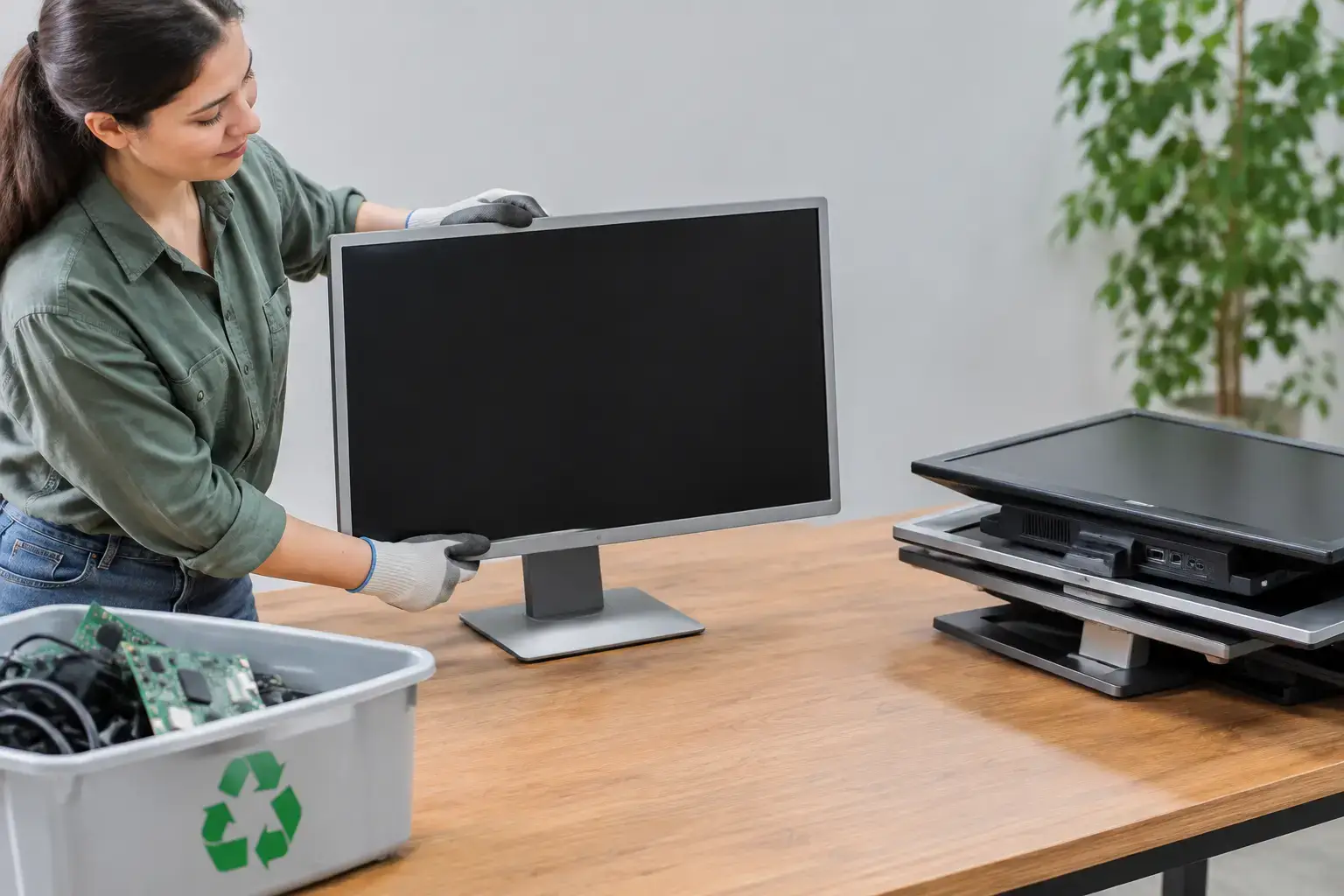
Then arrange a scheduled pickup. On-site collection removes the burden of transporting bulky monitors, multiple computers, or heavy servers in personal vehicles. It is especially useful when equipment is stored across different rooms, floors, or departments.
At collection, the equipment can be verified and recorded before it is removed. This is the point where a professional provider adds value beyond convenience. The objective is controlled handover, not simply loading items into a truck as quickly as possible.
After collection, data-bearing devices should follow the agreed wiping or destruction process, while the remaining equipment is prepared for responsible downstream handling. Licensed recyclers play an important role in processing materials appropriately and keeping electronic waste out of improper disposal channels.
When Households Should Use ITAD Services
ITAD is not only for companies with a storeroom full of retired equipment. Many homes have old laptops in drawers, unused phones in cabinets, desktop computers that no longer turn on, or printers and cables that have been kept “just in case.” Over time, these items become clutter, and some may still hold sensitive information.
A pickup-based service is particularly helpful when you have several items, a large desktop setup, or devices that are difficult to transport. It also removes the uncertainty of deciding whether a neighborhood scrap collector understands data security or has appropriate recycling arrangements.
Before pickup, avoid trying to dismantle devices yourself. Removing a hard drive incorrectly can damage the equipment and may not solve the data issue. If you know a device contains important files, let the provider know so that the right handling can be discussed before collection.
Questions to Ask Before Choosing an ITAD Provider
Not every electronic waste collection service offers the same safeguards. Ask how data-bearing devices are identified, whether secure data wiping is available, and what happens when a drive cannot be wiped. Find out what collection records are provided and whether the provider coordinates with licensed recyclers for downstream processing.
It is also worth asking whether the provider can handle the actual equipment you have. A household may only need help with a few computers and phones, while a business may require collection of servers, network hardware, office equipment, and a mixed batch of devices. Clear communication before pickup prevents surprises on the day.
Price matters, but the cheapest option is not always the best value when confidential data is involved. The cost of an unclear disposal process can be far greater than the cost of arranging proper collection and documented handling.
Responsible Disposal Is a Business and Personal Habit
Technology replacement is normal. The risk comes when disposal is treated as an afterthought. A defined ITAD process gives businesses a repeatable way to retire assets, while households gain a practical route for clearing unused electronics without compromising privacy.
If old devices are taking up space in your office or home, start by making a simple inventory of what you have and which items may store data. That small step makes it much easier to arrange a secure pickup and hand over your equipment with confidence.


Leave a Reply