
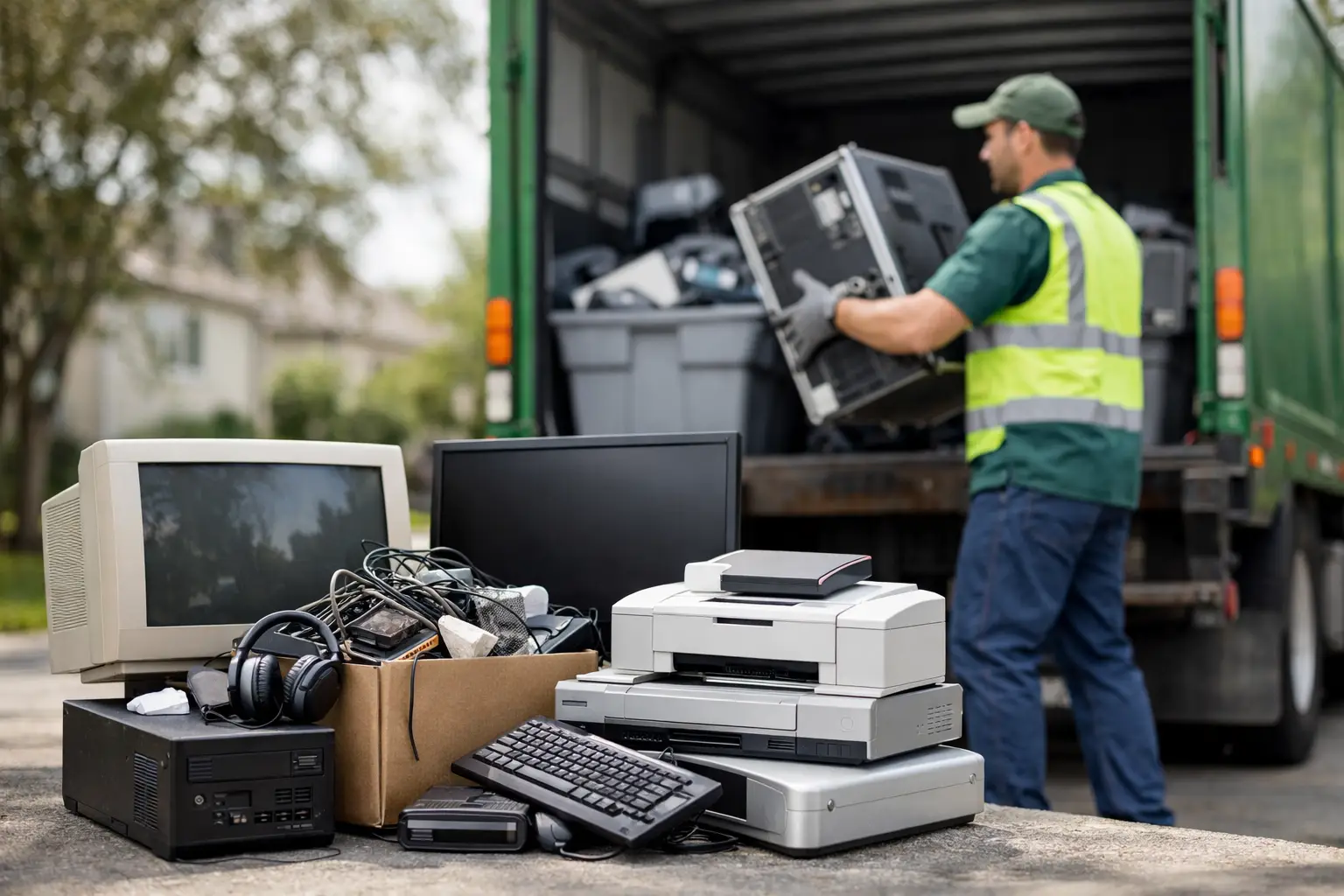
That old laptop in the drawer and the retired office printer in the storeroom create the same problem – they are easy to postpone, but not easy to dispose of properly. A pickup service for electronic waste solves the part most people get stuck on: getting unwanted devices out safely, without guessing where to bring them, how to handle stored data, or whether they will be processed responsibly.
For households, the issue is usually convenience mixed with uncertainty. You may have phones, tablets, routers, monitors, and cables piling up, but you are not sure what can be recycled together or whether a local drop-off point will accept everything. For businesses, the stakes are higher. Old desktops, hard drives, servers, and network equipment can hold sensitive company data, asset tags, user credentials, and records that should never end up in the wrong hands.
That is why pickup matters. It is not just about transportation. A professional collection service gives structure to a task that often feels messy, especially when devices are bulky, scattered across departments, or too sensitive to hand over casually.
What a pickup service for electronic waste should actually include
Not all e-waste collection is the same. Some providers are simply hauling items away. Others are handling electronics with the same care they would use for IT equipment that still has business value or confidential information attached to it.
A reliable pickup service for electronic waste should start with clear communication about what is being collected, where the pickup is happening, and what kind of handling is needed. That sounds basic, but it matters. A box of old phone chargers is one thing. A group of office PCs with hard drives still inside is another.
For homes, the best service removes the burden of sorting out transport for awkward or heavy items. For businesses, it should also support internal disposal workflows. That may include scheduled pickups, basic inventory verification, collection records, and a defined process for drives or devices that need data wiping or physical destruction.
The difference becomes obvious when you compare a professional service to an informal buyer or generic scrap collector. Scrap value may be the main focus for the latter. Secure handling, documented collection, and downstream accountability may not be.
Why data security changes the conversation
When people think about recycling electronics, they often think first about environmental impact. That matters, but data security is often the deciding factor.
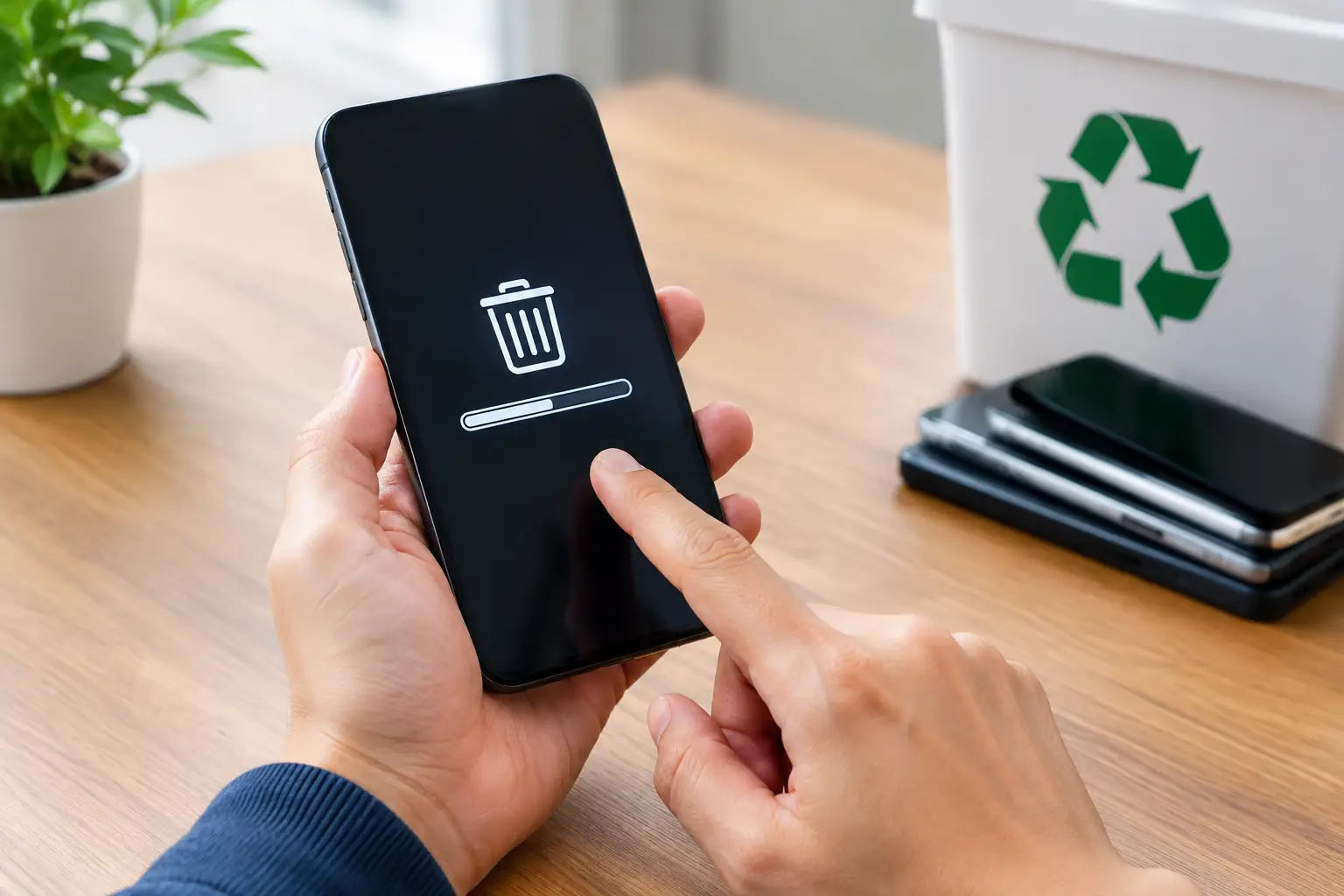
A surprising number of devices still store usable information even after they are no longer useful to the owner. Computers, laptops, phones, tablets, external drives, servers, copiers, and some network devices may all contain recoverable data. Deleting files or doing a quick factory reset is not always enough.
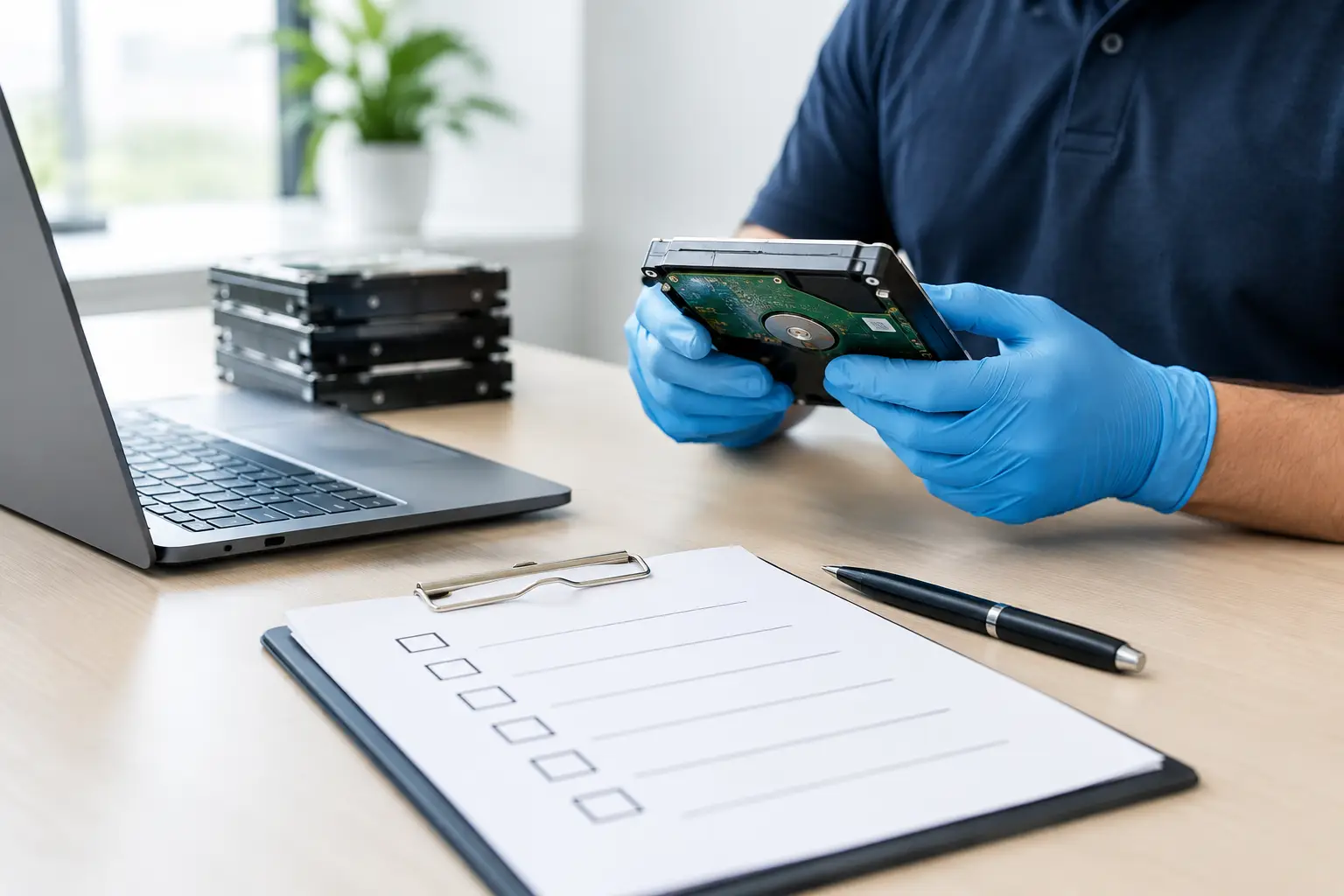
That is why businesses usually need more than a basic hauling service. They need a provider that understands the difference between moving equipment and managing IT disposal risk. Secure data wiping, drive handling procedures, and documented pickup records all reduce uncertainty.
For households, the same principle applies, just on a smaller scale. Family photos, saved passwords, banking apps, tax files, and personal messages often stay on devices longer than people realize. A professional service helps close that gap between “I do not need this anymore” and “I know this has been handled properly.”
Who benefits most from pickup-based e-waste collection
The obvious answer is anyone with electronics to remove, but pickup-based service is especially useful in a few situations.
If you are clearing out a home office, moving house, or replacing several devices at once, pickup saves multiple trips and the hassle of checking different acceptance rules. It is also helpful when the items are bulky, such as monitors, printers, UPS units, or old desktop towers.
For businesses, pickup becomes even more practical when equipment is spread across meeting rooms, storage areas, workstations, or branch locations. Office managers and admin teams are often the ones tasked with “making the old stuff disappear,” but they also need to avoid mistakes. That means keeping disposal organized, especially when devices may still be tagged, assigned, or holding company data.
Small and mid-sized companies usually do not have the time or internal logistics to package, transport, and document retired IT assets on their own. A service partner with an IT background is often a better fit than a basic waste collector because the handling expectations are different from ordinary junk removal.
What devices are usually covered
Most people underestimate how many things count as electronic waste. The list usually goes well beyond laptops and phones.
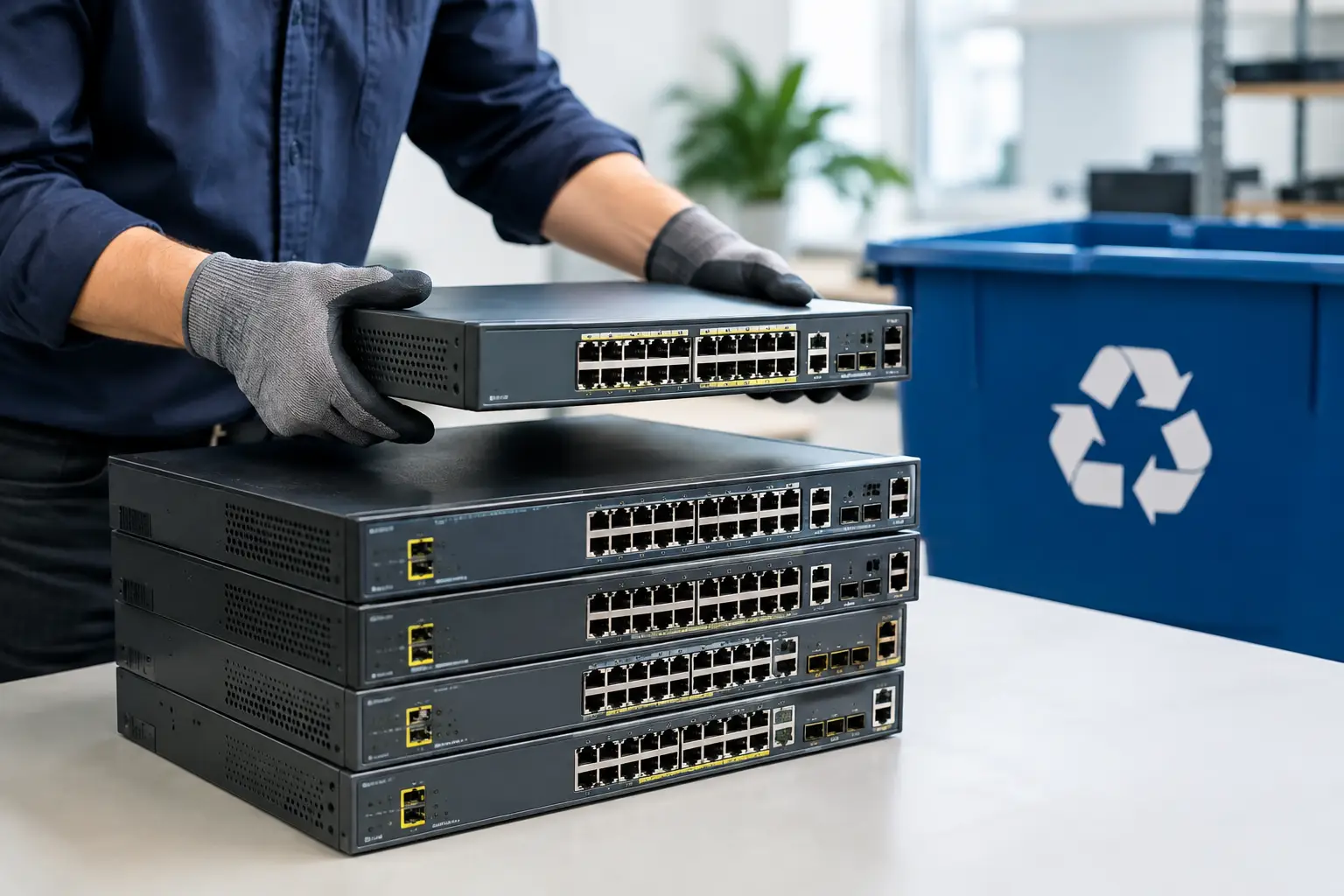
Common household items include desktop computers, tablets, printers, monitors, routers, modems, keyboards, cables, speakers, and small accessories. In office settings, the scope often expands to servers, switches, rack equipment, hard drives, office phones, scanners, projectors, and older networking hardware.
The right service will tell you clearly what is accepted and what may need special handling. That clarity matters because some items are easy to move and process, while others are heavier, more fragile, or more sensitive from a data standpoint.
It also helps prevent a common problem: storing electronics for months because no one is sure whether they qualify for pickup. In practice, many of them do.
How the process should work from pickup to recycling
A good service feels simple to the customer, even when the backend process is detailed.
It usually begins with a quick assessment. The provider asks what items you have, how much there is, and whether any devices contain storage media. For a business, they may also ask whether you need item verification, data wiping, or records for internal tracking.
The pickup itself should be scheduled, not vague. You should know when the team is arriving, what they are collecting, and what to prepare in advance. For homes, that may be as simple as placing devices in an accessible area. For offices, it may involve identifying departments, equipment counts, or collection points.
After collection, responsible handling matters just as much as the pickup. Devices with storage should go through the right data process before recycling or downstream transfer. Equipment should be handled in a way that avoids damage, loss, or mixing with uncontrolled waste streams. Documentation also plays an important role, especially for organizations that need proof of collection or internal disposal records.
This is one reason companies choose specialists like MYPC2U. The service is built around on-site pickup convenience, but with IT-aware handling, secure data wiping support, and documented collection practices that make disposal easier to trust.
What to ask before choosing a pickup service for electronic waste
If you are comparing providers, ask questions that go beyond price.
Start with security. If a laptop, server, or hard drive still contains data, what happens next? Is there a defined wiping process? Can storage devices be handled separately if needed? Is there any documentation available after collection?
Then ask about accountability. Who is collecting the items? Will you receive proof of pickup? Is the provider coordinating with licensed recyclers for downstream processing, or are the items simply being sold off wherever possible?
Convenience matters too, but it should not be the only factor. Fast pickup is useful. Flexible scheduling is useful. Neither means much if the handling process is vague.
The best provider is usually the one that makes disposal feel easier without making the chain of custody feel uncertain.
The trade-off between free collection and professional handling
Some customers are offered free or low-cost collection by informal buyers, and sometimes that arrangement works for low-risk items with no storage and little operational value. But that is not every situation.
If the equipment includes computers, hard drives, office devices with memory, or anything tied to customer records or internal business information, the cheaper option may not be the better one. A service built around professional handling can save time, lower risk, and reduce the chance of disposal problems later.
That trade-off is worth thinking through. The question is not only “Can someone take this?” It is also “Can someone take this responsibly, with the right process behind it?”
Why local pickup often works better than drop-off
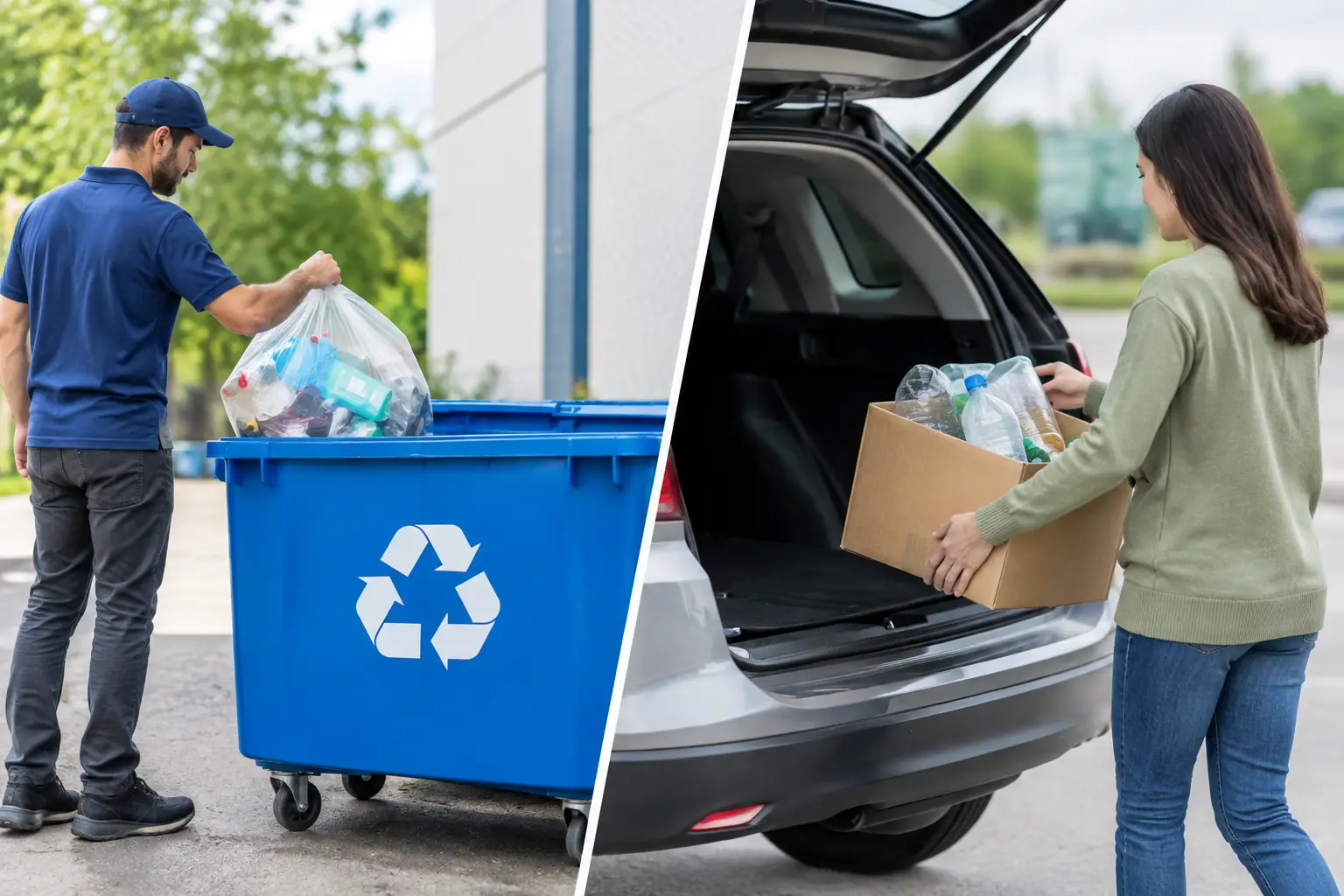
Drop-off programs have their place, but they depend on your time, transport, and willingness to sort everything out yourself. That becomes a problem when devices are heavy, when multiple people are involved, or when the equipment should not be left sitting around waiting for the next free afternoon.
Local pickup removes friction. It turns e-waste recycling from a postponed task into a scheduled job. For businesses, that can mean clearing storage space and reducing exposure faster. For households, it means finally dealing with old electronics without making disposal a weekend project.
The most useful service is the one people will actually use. When collection is straightforward, secure, and documented, electronics are more likely to be recycled properly instead of pushed into a corner for another year.
If you have devices you no longer need, the next step does not have to be complicated. The right pickup service gives you a practical way to clear space, protect your data, and hand off unwanted electronics with confidence.


Leave a Reply